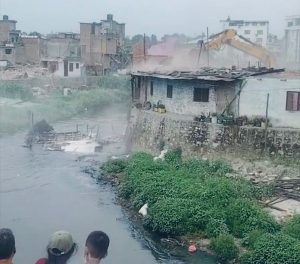



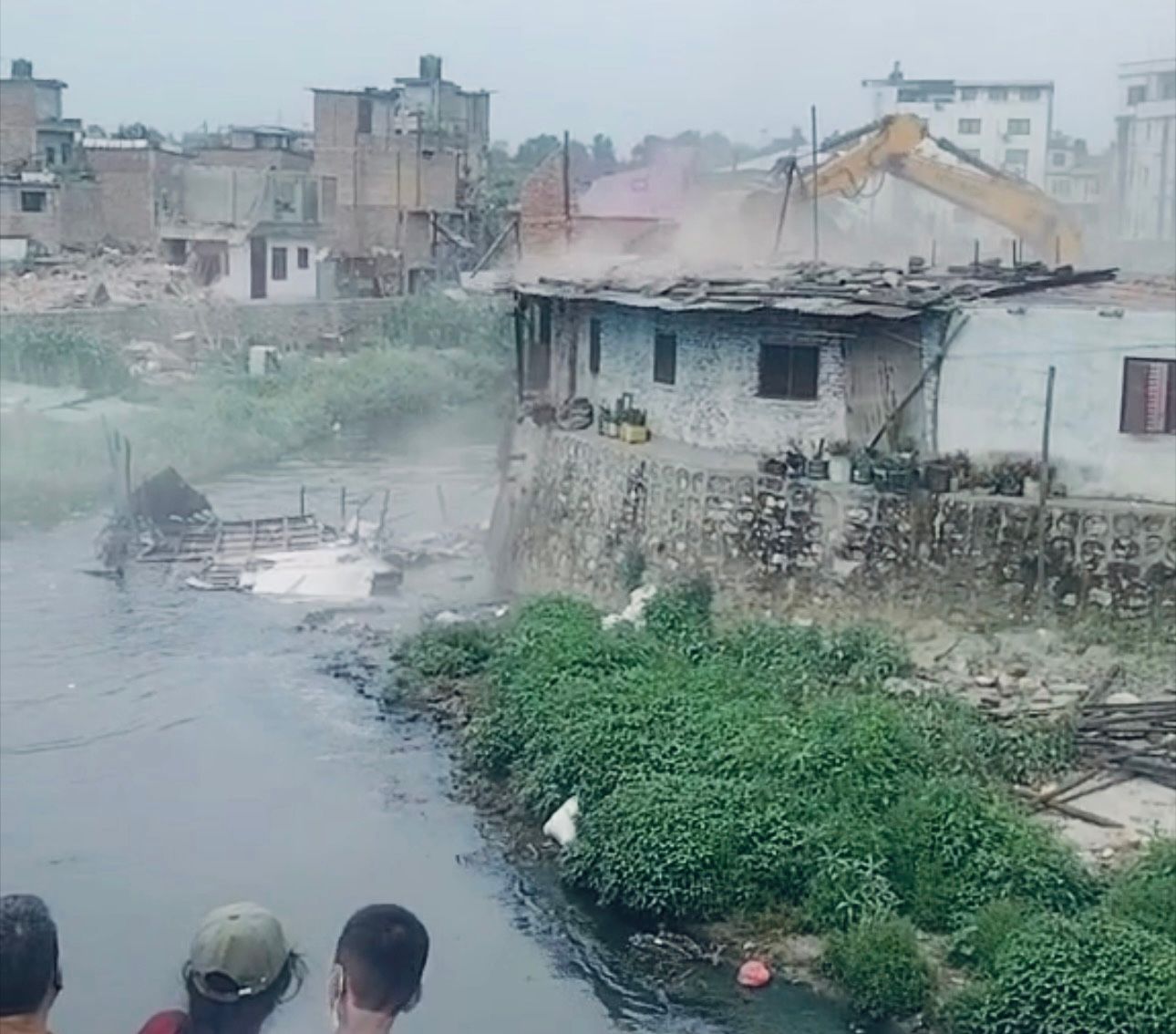
Across cities like Butwal, Birgunj, Kathmandu, and Pokhara, authorities have been carrying out eviction drives targeting settlements built on public land, especially along riverbanks, roadsides, and government-owned property. Local governments and metropolitan offices have intensified enforcement against “encroachment” of public land. Bulldozers and cranes are being used to clear the illegally made buildings on public property. The government’s aim is to clear the encroachment for urban planning and flood control, especially in river corridors. Affected people were informed before enforcing the order, and deadlines were set for evacuation before actual enforcement.
The government has removed squatter settlements from areas like Thapathali and Manohara in Kathmandu on Saturday and Sunday. In Thapathali, Kathmandu, before using bulldozers on illegal structures, residents were given a final deadline of the evening of April 24. On 26 April, the evacuation started around the Manohara riverbank of the Kathmandu valley.
There are a few concerns of residents claiming long-term occupancy on encroached land, demanding recognition under housing rights frameworks. There is a risk of constitutional, legal, and human rights complications arising from the eviction of squatters or unorganised residents without proper verification.
The Supreme Court has issued a show cause order against the government authorities over the eviction of human settlements from various river banks and public places in the Kathmandu valley. A single bench of Justice Shantisingh Thapa on Monday issued a show cause order seeking written responses from the District Administration Office, Kathmandu and Kathmandu Metropolitan City. According to Supreme Court spokesperson Arjun Prasad Koirala, an order has been issued asking both parties to be present for a discussion on the matter on May 5.
The writ petition was filed against the District Administration Office and Kathmandu Metropolitan City that issued a notice to vacate the squatter settlements on the river banks of Kathmandu.
Currently, there are 1,152,870 landless families across the country. While squatter settlements in the Kathmandu Valley are being cleared, the problem of squatters and landless people nationwide is likely to become more complex. As Nepal’s constitution and existing laws protect citizens’ right to housing, evicting people without following due process will be challenging for the current government. Article 37 of the Constitution of Nepal guarantees the fundamental right to ‘adequate housing’ for every citizen. Subsection (2) of the same article states: ‘No citizen shall be evicted or encroached upon from their owned dwelling without due process of law.’ In several previous orders, the Supreme court of Nepal has clearly stated that before evicting any citizen from their housing, alternative arrangements for their residence must be made.