





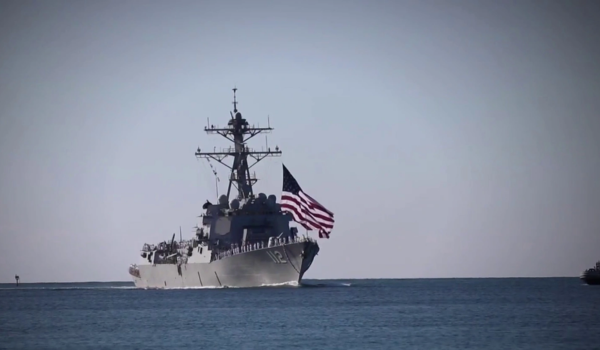
The United States Navy has begun enforcing a full maritime blockade of Iranian ports, escalating tensions in West Asia after weekend peace talks in Pakistan collapsed without agreement. The operation took effect at 7:30 last evening, with U.S. Central Command stating that the restrictions apply to vessels entering or leaving Iranian coastal areas in the Persian Gulf and the Gulf of Oman.
Officials said ships bound for non-Iranian destinations can still transit through the Strait of Hormuz, though they may encounter increased military presence and communications checks. The U.S. military warned that any vessel entering or departing Iranian ports without authorization could face interception, diversion, or capture. Neutral vessels currently docked at Iranian ports have also been granted a limited grace period to leave.
Iran responded with sharp warnings, saying it would not tolerate interference in its waters and threatening to disrupt other key regional ports and shipping choke-points, if the blockade continues. Tehran has reportedly mobilized naval forces along its southern coastline, raising concerns about possible maritime confrontations in the coming hours.
The move is being seen as a major escalation and a shift toward economic pressure rather than direct military confrontation. The Strait of Hormuz handles roughly one fifth of global crude oil shipments, making any disruption significant for global energy markets. By restricting Iran’s oil exports, Washington appears to be attempting to push Tehran back to negotiations while limiting the risk of full scale conflict.
However, even limited naval enforcement carries risks. Any confrontation at sea could quickly escalate, potentially drawing in other major powers whose energy shipments depend on the route. There are also concerns about retaliatory action by Iran through regional allies or disruption of other shipping lanes. Oil prices have already reacted to the developments, and global markets are closely watching the situation as the blockade enters its initial hours.
