



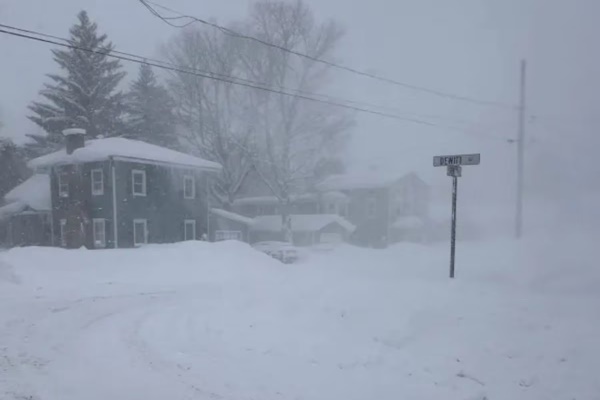
In the United States, a powerful winter storm has swept across the Northeast, disrupting normal life and bringing major cities from Washington to Boston to a standstill. Heavy snowfall and strong winds triggered travel bans, school closures and widespread flight cancellations. The National Weather Service has warned of a major winter storm affecting the northern Mid-Atlantic and the Northeast.
Snowfall rates of two to three inches per hour were reported in several areas, with total accumulation expected to reach up to two feet in some places, making travel nearly impossible. Blizzard warnings have been issued across large parts of the region. New York City imposed a travel ban last evening. Mayor Zoharan Mamdani said the city has not experienced a storm of this magnitude in the past decade. New Jersey also enforced a travel ban, while Rhode Island urged residents to avoid road travel. Several states have declared emergencies as conditions worsened. Air travel has been severely affected.
The Wall Street Journal reported that nearly 8,000 flights were cancelled over yesterday and today, mainly in Boston and New York. Boston and much of eastern Massachusetts are forecast to receive up to two feet of snow, with wind gusts reaching 75 miles per hour. The Weather Service in Boston has described the system as potentially historic and destructive. In Washington, D.C., several inches of wet snow are expected. Federal agencies have announced a two-hour delay, and many schools in the area have either closed or postponed opening.
Forecasters have also warned of strong onshore winds that could lead to coastal flooding from Delaware to Cape Cod. The Weather Service cautioned that flooding may be severe enough to cause structural damage and widespread road inundation. Nearly 54 million people, from the central Appalachians to coastal Maine, remain under winter storm or blizzard warnings. The storm is expected to move away from northern New England by tomorrow.