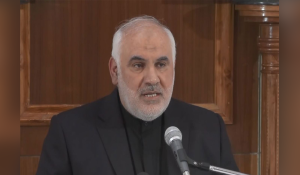


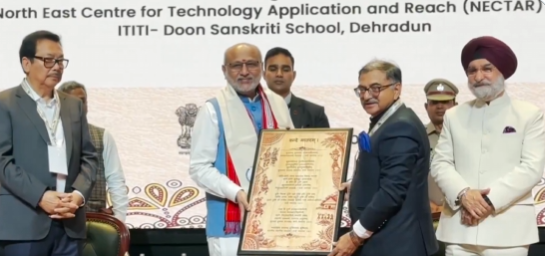
Vice President C. P. Radhakrishnan has said that development can only be called true development when it is inclusive and reaches every section of society. Mr Radhakrishnan said this while inaugurating the conference titled Transformation of Tribal Lives through Science and Technological Interventions – Preserving Language, Faith and Culture in New Delhi today.
The conference was organised by the Department of Science and Technology, Government of India, in collaboration with the North East Centre for Technology Application and Reach (NECTAR) and ITITI Doon Sanskriti School, Dehradun. Addressing the gathering, the Vice President noted that India’s tribal areas present a significant opportunity for green economic development, with about 1.4 lakh tribal villages housing nearly 9 per cent of the total population of the country.
He highlighted that the conference has demonstrated the power of scientific temper and technological advancement when combined with traditional knowledge. He emphasised that when modern science walks hand in hand with respect for language, faith, and culture, it becomes a force of protection and empowerment for every community.
The event also marked the Silver Jubilee of ITITI Doon Sanskriti School, highlighting its role in empowering tribal youth through science and technology. Mr Radhakrishnan noted that the campus was inaugurated 25 years ago by former Prime Minister Atal Bihari Vajpayee, when it had only 25 children. He said, today, the school has become a ray of hope for thousands of tribal children, with over two thousand benefiting from free, high-quality education.
He added that Atal Bihari Vajpayee’s foresight ensured that tribal communities were not just included in development but were placed at the heart of nation-building. He also appreciated the efforts of Prime Minister Narendra Modi for bringing the contribution of Janjatiya freedom fighters to the forefront of Bharat’s national consciousness.
Addressing the event, Delhi Lieutenant Governor Taranjit Singh Sandhu said that India’s tribal communities represent both diversity and depth. He pointed out that many people in tribal areas continue to face structural challenges, with limited access to healthcare, education, infrastructure, and economic opportunities. He said that as the world changes rapidly, science and technology are opening new doors, enabling digital learning and improving healthcare through telemedicine in remote areas, thereby reducing long-term vulnerabilities.