


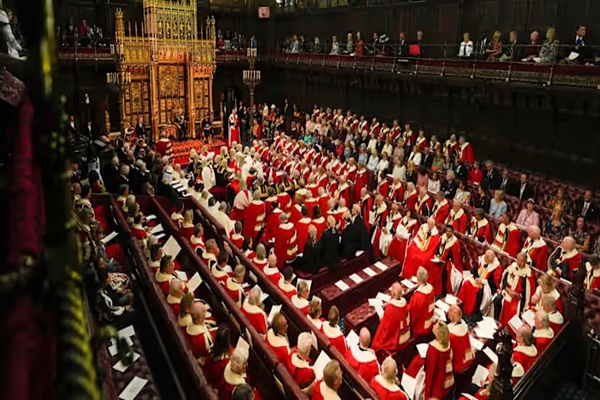
Britain’s Parliament has approved legislation to remove the remaining hereditary peers from the House of Lords, bringing an end to a centuries-old system in which aristocrats held seats in the upper chamber by birth. The government says member in the Upper House should not be secured by birth.
The House of Lords passed the Hereditary Peers Bill last evening, fulfilling a reform launched more than 25 years ago and a key manifesto pledge from Prime Minister Keir Starmer’s Labour government to modernise the Upper Chamber.
In a statement, the leader of the House of Lords, Angela Smith, said that the Lords played a vital role within our bicameral parliament, but nobody should sit in the House by virtue of an inherited title. Before the reform, 92 hereditary peers were still allowed to sit and vote in the Upper Chamber. This arrangement was introduced as a temporary compromise after more than 600 hereditary members were removed in 1999 under Tony Blair, the former Labour prime minister. The upper chamber of British Parliament has about 800 members in total, mostly appointed for life by the prime minister on the advice of political parties or an independent commission, alongside includes bishops from the Church of England.