


The conflict across West Asia has sharply intensified in the past few hours, with Israeli military officials claiming a major strike on Iran’s command structure. The Israeli Defense Forces say they have killed Ali Larijani, a secretary of Iran’s supreme national security council, along with a senior commander of the Basij paramilitary forces. After the death of Ayatollah Ali Khamenei on February 28, 2026, Larijani emerged as Iran’s de facto wartime leader, coordinating the country’s strategic and military responses. There has been no immediate confirmation from Tehran on Larijani’s reported death. At the same time, Israel reports carrying out multiple interceptions of Iranian ballistic missiles since midnight, even as cross-border hostilities continue to expand. From Washington, President Donald Trump has called for the formation of an international coalition to secure the Strait of Hormuz, where oil transit has been severely disrupted. The Pentagon claims that thousands of strikes have significantly degraded Iran’s launch capabilities, but the continued missile activity today indicates that Iran retains operational capacity.
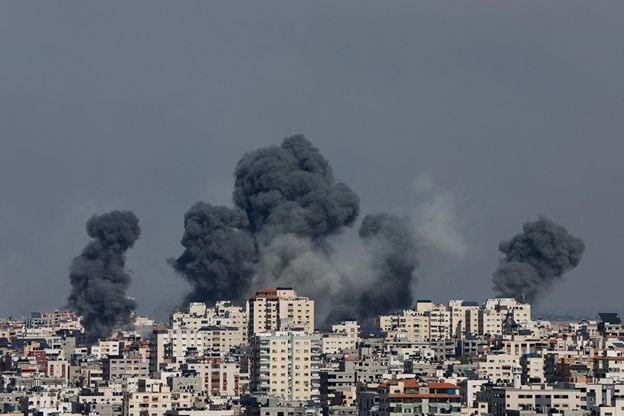
Tensions are spreading rapidly across West Asia, with Lebanon witnessing intensified Israeli military activity. Fresh evacuation orders have been issued for civilians south of the Zahrani River, while thick smoke continues to rise over Beirut’s southern suburbs following sustained strikes. In Iran, officials remain defiant despite reported leadership losses, continuing missile launches toward Israel and warning that any country hosting US military operations could be considered a legitimate target.
Across the Gulf, the security situation remains volatile. Explosions of air interceptions were reported over Doha, while a Kuwaiti-flagged commercial tanker was hit east of Fujairah, raising fears over the safety of critical shipping routes. Gulf Cooperation Council states have condemned the escalation and are urging stronger measures to protect energy infrastructure and maritime corridors. In the United Arab Emirates, authorities have moved quickly to stabilise the situation. Airspace has reopened after a temporary closure, but officials confirmed that debris from an intercepted missile struck a residential area in Abu Dhabi, killing one person.
Meanwhile, diplomatic efforts are underway, with Sheikh Abdullah bin Zayed Al Nahyan holding urgent talks with international counterparts, stressing the UAE’s right to self-defence while reiterating that its territory must not be drawn further into the widening regional conflict.