


The US military will start a maritime blockade of Iranian ports today, following President Donald Trump’s orders to block the Strait of Hormuz. According to the United States Central Command (CENTCOM), the blockade will apply to all ships going in and out of Iranian ports and coastal regions. However, ships passing through the Strait of Hormuz to non-Iranian ports will be allowed.
All mariners have been advised to monitor Notice to Mariners broadcasts and maintain communication with US naval forces on bridge-to-bridge channel 16 while operating in the Gulf of Oman and approaches to the Strait of Hormuz. In response, Iran’s Islamic Revolutionary Guard Corps has warned that any attack or mistake by the US or its allies would face a strong reaction.
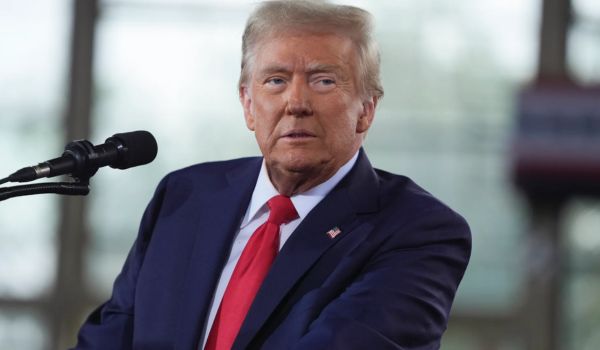
Iran also claimed it has full control over the Strait of Hormuz. US President Donald Trump has ordered immediately blockade of the Strait of Hormuz immediately after the collapse of peace talks with Iran. Mr Trump described the move as necessary to stop Iran’s extortion and nuclear ambitions and predicted Tehran would soon return to negotiations on American terms.
Akashvani correspondent reports that Iranian President Masoud Pezeshkian later said Tehran remains ready to reach a balanced and fair agreement to ensure lasting peace and security, but added that “double standards” by the United States remain the main obstacle to a deal. The Strait of Hormuz remains one of the world’s most critical energy chokepoints, with roughly a fifth of global oil and significant volumes of liquefied natural gas passing through the narrow corridor each day. Any blockade or military escalation in the area could disrupt global energy supplies, push up oil prices, and raise insurance costs for shipping companies.
On the ground, Israel reported carrying out a targeted raid on a hospital in the southern Lebanese town of Bint Jbeil, saying armed Hezbollah operatives were inside. The Israeli military said around twenty fighters were killed. Israeli airstrikes also continued across southern Lebanon, with Lebanese authorities reporting civilian casualties.
Lebanese Prime Minister Nawaf Salam said his government is working to secure a full Israeli withdrawal from southern Lebanon and end the fighting, adding that more than two thousand people have been killed in this phase of the conflict. Meanwhile, Pezeshkian discussed developments with Russian President Vladimir Putin, as diplomatic efforts continue amid rising military tensions across West Asia.