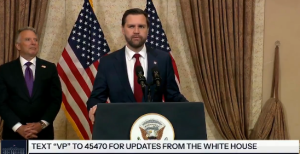



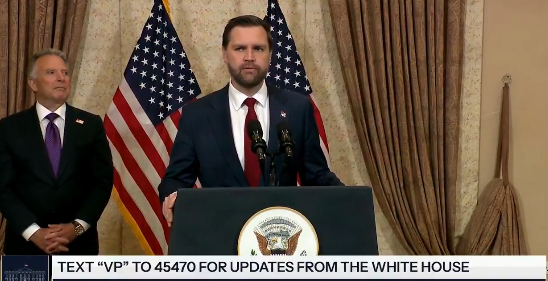
Talks between the United States and Iran have ended without an agreement after nearly 21 hours of negotiations in the Pakistani capital, Islamabad. The US Vice President JD Vance said the discussions were substantive but failed to produce a deal. The US Vice President said the core of the disagreement is Washington’s demand for a clear and long-term commitment from Tehran not to pursue nuclear weapons or capabilities that could enable rapid weaponisation. He said the US side described its approach as flexible and in good faith, but Iran did not accept the proposed terms. He added that a final and best offer has now been placed before Iran, with Washington awaiting Tehran’s response.
In an earlier statement shared by the Government of the Islamic Republic of Iran on X, Tehran indicated that the dialogue would continue even as some disagreements remain unresolved. The meeting marks the highest-level direct engagement between Washington and Tehran in decades. The talks were seen as a key diplomatic effort to reduce tensions and explore possibilities of a structured understanding between the United States and Iran. Key issues included efforts toward a ceasefire in West Asia, the release of Iranian assets held by the US, and discussions on the Strait of Hormuz. Amid talks, US President Donald Trump said it made no difference whether a deal was reached with Iran. Speaking to reporters, President Trump added that operations in the Strait of Hormuz were ongoing and asserted that the United States had already won.
The US delegation was led by Vice President JD Vance, along with special envoy Steve Witkoff and Jared Kushner, supported by senior advisers. Iranian Parliament Speaker and delegation head Mohammad Baqer Qalibaf, Foreign Minister Abbas Araghchi, and Deputy head of the Supreme National Security Council Ali Bagheri-Kani participated in the talks. Meanwhile, in a video statement, Israeli Prime Minister Benjamin Netanyahu said the campaign against Iran is not yet over but claimed Israel has achieved historic gains and foiled Iran’s nuclear ambitions. He said Israel launched the campaign because Iran was close to acquiring nuclear weapons and had the capability to produce hundreds of missiles per day.