


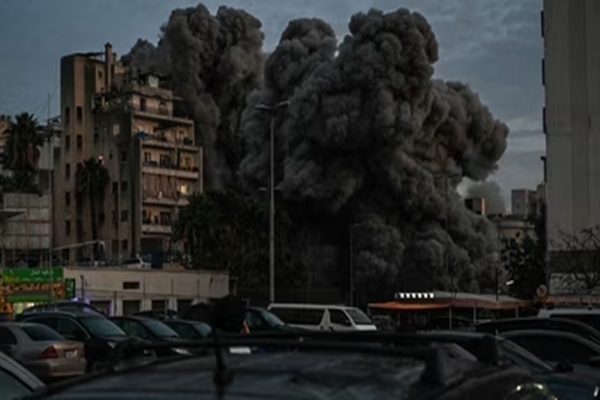
Tensions across West Asia rose sharply as facilities linked to the world’s largest natural gas field in Iran came under a coordinated US-Israeli strike. Iranian state media reported that gas processing plants and petrochemical installations in the Asaluyeh Special Economic Energy Zone were targeted, disrupting key phases of the South Pars field and halting production. Fires were reported but later contained, and no casualties were immediately confirmed. The strike marks the first direct Israeli attack on Iran’s upstream energy infrastructure since the conflict began on February 28.
The attack triggered immediate warnings from Iran’s Islamic Revolutionary Guard Corps, which declared several Gulf energy sites direct and legitimate targets and urged evacuations in Saudi Arabia, the UAE, and Qatar. Tehran described the strikes as a shift toward full-scale economic war, while Qatar and the UAE condemned the action as dangerous escalations threatening regional stability and global energy security. The strike coincided with Iranian missile barrages on Israel and further disruption of energy flows through the Strait of Hormuz.
Tehran’s threats mark a significant escalation in a conflict already affecting global energy markets, as world crude and gas prices surged on fears of wider disruptions. Gulf states have condemned the warnings, stressing the importance of protecting civilian infrastructure and maintaining stability. Qatar denounced the attack as dangerous and irresponsible, saying that targeting shared energy resources jeopardises global energy security. Further targeting of energy assets could prolong the crisis, deepen economic fallout and draw more regional actors into the fray, increasing the risk of a broader confrontation that extends beyond current military engagements.
Global energy markets reacted sharply, with Brent crude climbing nearly six percent to around $110 per barrel and European gas benchmarks rising more than seven percent. Analysts warn that continued attacks could prolong the conflict and disrupt significant portions of global LNG supplies. Gulf energy infrastructure remains on high alert as the UAE, Saudi Arabia, and Qatar implement emergency safety measures. Diplomatic efforts are underway, including an Arab and Islamic foreign ministers’ meeting in Riyadh, as regional and international actors seek to prevent further escalation.