


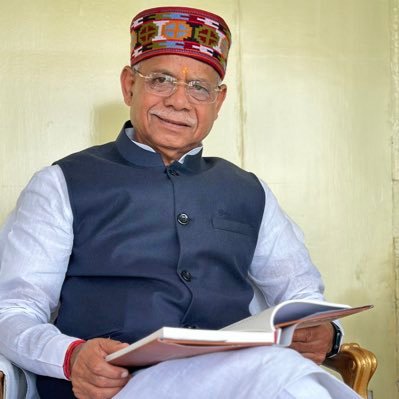
Governor Shri Shiv Pratap Shukla said that taxation is not merely a mechanism for revenue collection but a foundation of trust, accountability and transparency between the State and its citizens. An effective tax system, he remarked, forms the bedrock of economic justice, social inclusion and good governance. He described the Goods and Services Tax (GST) as a historic milestone that unified the indirect tax regime and strengthened cooperative federalism.
The Governor was addressing the inaugural session of a two-day International Conference on “Tax Reforms in India: Challenges and Prospects,” sponsored by the Indian Council of Social Science Research (ICSSR) at Himachal Pradesh National Law University (HPNLU), Shimla. He stated that tax policy determines how a nation mobilises its resources and channels them towards development, welfare and infrastructure creation.
Tracing the evolution of India’s tax system since Independence, the Governor noted that significant reforms were undertaken, particularly after liberalisation, to make the tax framework simpler, more transparent and competitive. He highlighted extensive digitisation of tax administration in recent years, including faceless assessments, online appeals, simplified return processes and the Taxpayer Charter, which have enhanced transparency and built greater taxpayer confidence. Initiatives such as the “Vivad se Vishwas” scheme, he said, reflected a participatory rather than punitive approach to tax collection.
The Governor observed that despite notable progress, challenges remain, including expanding the tax base, curbing tax evasion, addressing complexities arising from the digital economy and maintaining balance amid global tax competition. He emphasised that tax reform is not merely a legal subject but is deeply interconnected with economics, public finance, governance and policy making. Appreciating the active participation of young scholars and students, he said early engagement with complex issues of public finance fosters critical thinking and nurtures responsible citizens and policy analysts.
He underlined that the ultimate objective of a robust tax system is not merely revenue enhancement but inclusive and sustainable development. Citing Acharya Chanakya’s Arthashastra, the Governor said taxation should be just, balanced and welfare-orientated, ensuring that it does not burden citizens but promotes production and shared prosperity. He added that GST stands as a contemporary example of such balanced reform.
Prof. Priti Saxena, Vice-Chancellor, HPNLU, welcomed the Governor and outlined the key themes of the two-day conference.
Prof. Nigam Nuggehalli, Keynote speaker and Professor & Registrar, NLSIU Bengaluru, emphasised the need to examine real-world complexities in public finance and governance, noting that major reforms like GST must continually adapt to evolving economic realities and global dynamics.
Conference Convener Prof. Girijesh Shukla highlighted recent efforts toward modernization and digitization of the tax system, including faceless assessments and AI-driven analytics, while stressing the need to broaden the tax base without burdening middle and lower-income groups.
Prof. Alok Kumar, Registrar, proposed a vote of thanks.
Earlier, the Governor inaugurated the newly designed HPNLU Litigation Lab and also inaugurated the Blood Donation Camp organized by the Youth Red Cross of the University.
Captain Rameshwar Singh Thakur, Chairman, Himachal Pradesh Public Service Commission; Shri Chandra Prakash Verma, Secretary to the Governor; academicians; delegates; students; and other prominent people were also present on the occasion.