





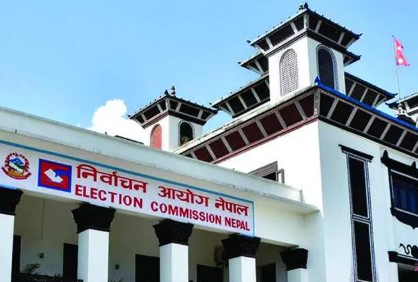
The counting of votes under the proportional representation system for the House of Representatives election in Nepal has concluded. Now, the Election commission has started the groundwork to determine the allocation of seats for political parties under this system.
Following the completion of vote counting for the proportional representation segment of the House of Representatives elections, 51 participating parties received fewer votes than the required parliamentary representation threshold. In the elections held on March 5 under the proportional representation system, a total of 57 parties participated with a combined election symbol. Out of these, six parties are set to enter parliament, while 51 did not achieve the minimum votes required.
The Election Commission of Nepal has clarified that only parties securing at least three percent of the total valid votes will be granted seats. In the proportional representation system, the entire country is treated as a single electoral constituency, allowing candidates from a party to be elected to the House of Representatives based on the total votes each party receives.
Under the proportional representation system, 17,039,115 of valid votes were cast. The Rastriya Swatantra Party (RSP) leads with 5,103,923 votes. The Nepali Congress (NC) garnered 1,749,583 votes, CPN (UML) received 1,404,854 votes, the Nepali Communist Party (NCP) obtained 805,773 votes, the Shram Sanskriti Party (SSP) got 378,649 votes, and the Rastriya Prajatantra Party (RPP) secured 329,472 votes.
