


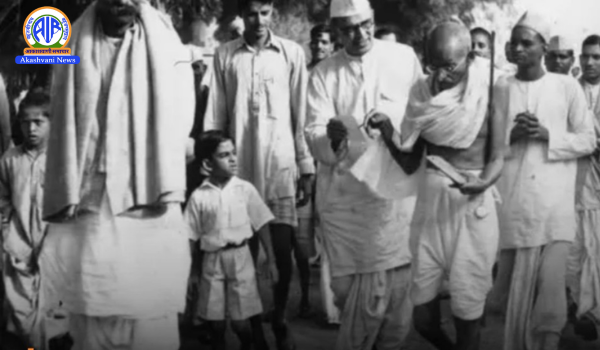
Today marks the 108th anniversary of the Champaran Satyagraha, a defining moment in India’s freedom struggle led by Mahatma Gandhi. On this day in 1917, in the Champaran district of Bihar, the movement was launched to address the grievances of indigo farmers who were compelled by British planters to cultivate indigo under the oppressive Tinkathia system. It also marked Mahatma Gandhi’s first experiment with Satyagraha in the country.
In response to the persistent efforts of local farmer Raj Kumar Shukla, Mahatma Gandhi visited the region and undertook a detailed inquiry into the plight of the peasants. Defying British orders to leave, he mobilised farmers through non-violent resistance and brought national attention to their suffering. The movement eventually led to the formation of an inquiry committee, with Gandhiji as a member, and by 1918, the movement successfully forced the abolition of the forced indigo system. The Champaran Satyagraha not only secured justice for farmers but also marked the rise of Gandhi as a mass leader, laying the foundation for India’s larger freedom movement.