

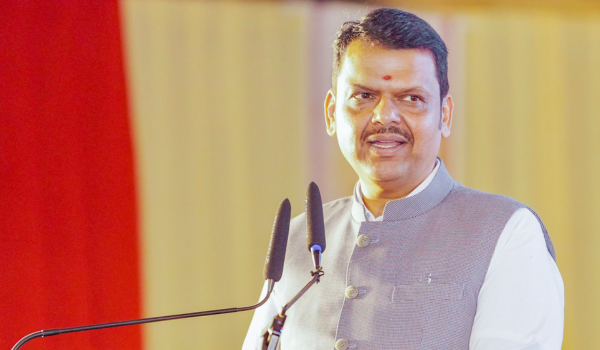
Maharashtra Chief Minister Devendra Fadnavis today announced that the ruling Mahayuti alliance will launch a statewide drive to collect one crore signatures in support of the women’s reservation bill, even as a war of words broke out between the ruling alliance and the opposition over its implementation.
Addressing a press conference in Mumbai, the CM said rallies would also be organised across Maharashtra to build public pressure and expose the “anti-women stance” of opposition parties. He asserted that the alliance would continue its agitation until reservation for women in Parliament and state legislatures is implemented.
Mr Fadnavis termed the events of April 17, when the bill was voted down in Parliament, as a “black day” in the country’s history, alleging that opposition parties had reversed their stand after realising that the NDA lacked a two-thirds majority. He said parties which had in 2023 agreed to link the implementation of the quota with delimitation and the census later backtracked, calling it a denial of women’s rightful participation and an insult to “nari shakti”.
Explaining the legislative context, Fadnavis said the proposal was in line with the 2023 constitutional amendment mandating implementation after completion of census and delimitation, processes delayed due to the COVID-19 pandemic. He said the intent was to ensure rollout by 2029 while maintaining equitable regional representation, adding that increasing parliamentary seats in view of population growth since 1971 was also necessary.
Meanwhile, NCP (Sharadchandra Pawar faction) working president and MP Supriya Sule questioned the Centre over the delay in implementing the women’s reservation law despite its unanimous passage in 2023. Speaking to reporters in Mumbai, she asked why 33 per cent reservation for women had not been implemented even after nearly three years.
Smt Sule said the quota should have been enforced in the 2024 Lok Sabha itself and urged the government to immediately provide reservation to women in the existing 543 seats. She argued that the legislation was effectively linked to delimitation and accused the government of delaying the census and related processes, including caste enumeration, due to a lack of political will.