


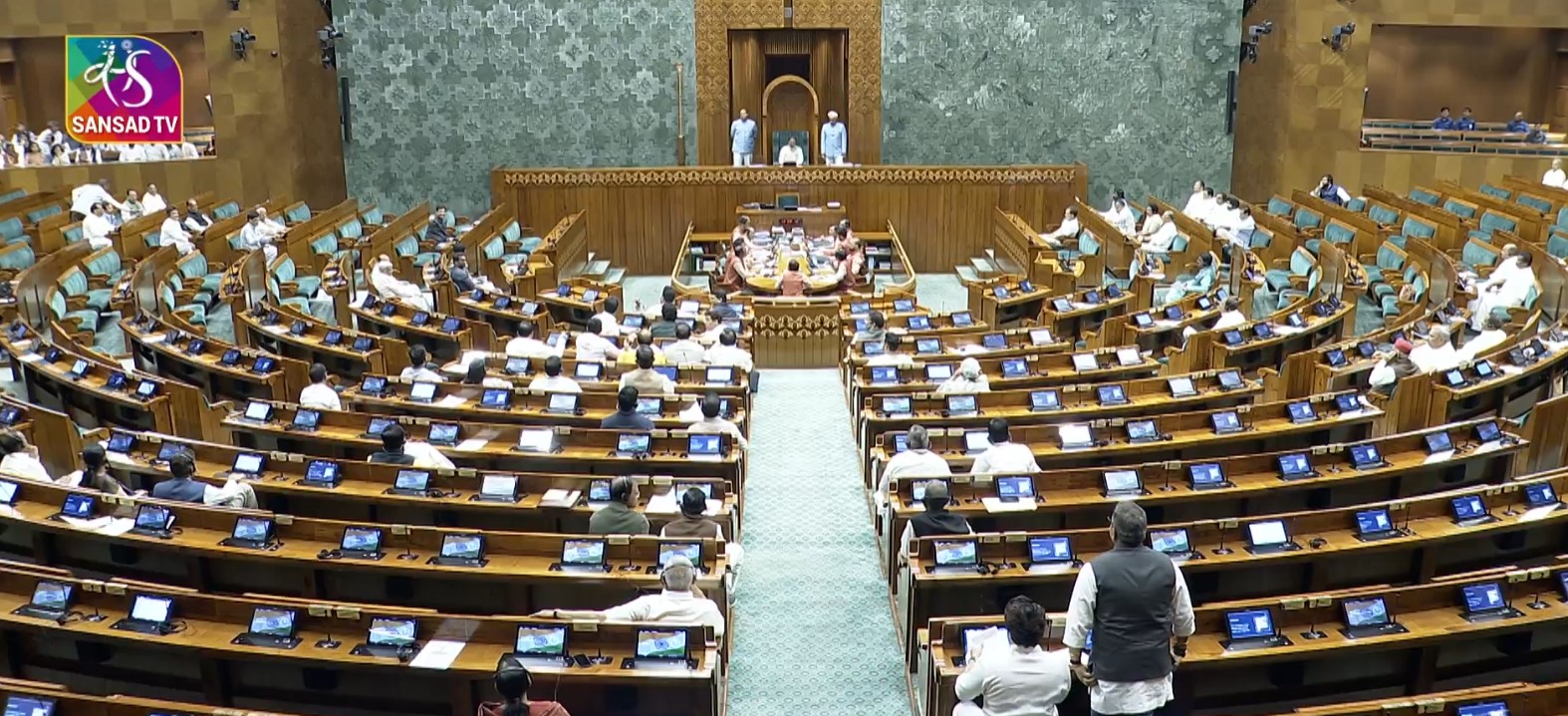
Lok Sabha has taken up the Jan Vishwas (Amendment of Provisions) Bill, 2026, for consideration and passing. The legislation amends certain enactments for decriminalising and rationalising offences to further enhance trust-based governance for ease of living and doing business. The bill will decriminalise minor offences and implement measures such as revising fines and penalties proportionate to the offence. It proposes to amend 79 Central Acts administered by 23 Ministries. A total of 784 provisions are being proposed to be amended, out of which 717 provisions are being decriminalised to foster ease of doing business, and 67 provisions are being proposed to facilitate ease of living.
Initiating the discussion, Chamala Kiran Kumar Reddy of Congress said, ‘This Bill claims to decriminalise multiple laws, but in reality, it will increase corruption.’ He said that the bill does not strengthen public trust and fails to address deeper structural issues. Mr Reddy said that diluting criminal penalties will not improve the ease of doing business. He claimed that the Bill removes imprisonment for those manufacturing and selling fake medicines and fraudulent cosmetics.
Tejasvi Surya of the BJP said this bill will improve both ease of doing business and ease of living. He lauded the government, saying it has brought forward the largest decriminalisation exercise in independent India’s history. Mr Surya said that, with this single piece of legislation, the government is decriminalising over one thousand minor offences. He said, ‘This is not just a reform but a model for the rest of the world to follow.’ Mr Surya added that the Jan Vishwas Bill is not merely about numbers, but it reflects a fundamental philosophical shift from distrust to trust and from a regulator to a facilitator, which is the foundation of building a Vikshit Bharat.