

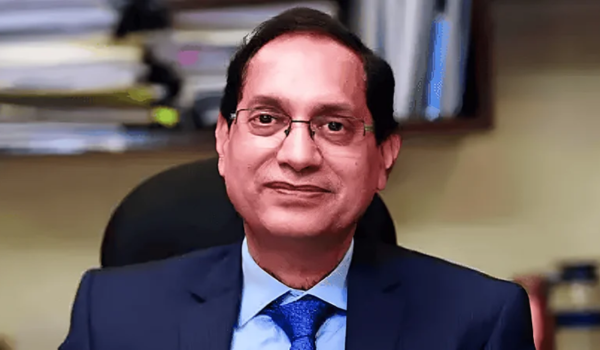
SEBI Chairman Tuhin Kanta Pandey today said that India’s capital markets are being developed as transparent, well-governed, and investable for long-term institutional capital. Addressing an Investor Conference in Mumbai this morning, Mr Pandey said India’s growth story is anchored in strong fundamentals.
Stating that India’s markets connect household savings with enterprise growth and global capital with domestic opportunity, the SEBI Chairman informed that India today has over 140 million unique investors. Talking about the vibrancy of IPO markets, Mr Pandey said companies have raised about 1.8 trillion rupees through 329 Initial Public Offerings (IPOs) from April 2025 to January this year. He added that the corporate bond market has also grown at about 12% since the Financial Year 2024-25, reaching 58.2 trillion rupees as of January 2026. The SEBI Chairman further said that the mutual fund industry has grown from 12 trillion rupees to 81 trillion in the last decade, while assets under foreign portfolio investors have grown more than threefold to about 78 trillion. Mr Pandey further stated that the Alternative Investment Funds – AIF ecosystem has grown from 0.1 trillion rupees in FY15 to about 6.5 trillion by the end of December 2025, channelling risk capital into startups and emerging sectors.
Emphasising that SEBI’s approach is to have optimum regulation, Mr Pandey said India is aware of the fact that growth is no longer just about returns, but it is about resilience, credibility, and predictability. Listing out regulatory reforms to enable growth and ease of doing business, SEBI Chairman said the SWAGAT-FI framework enables single-window access and simplified compliance for trusted foreign investors and a consolidated ‘India Market Access’ portal to strengthen engagement with the foreign investor community.
Reiterating that India’s capital markets are evolving into a platform that combines scale with stability and opportunity with improving market quality, Mr Pandey said SEBI’s focus is on building markets that are efficient in good times and resilient in volatile times.