





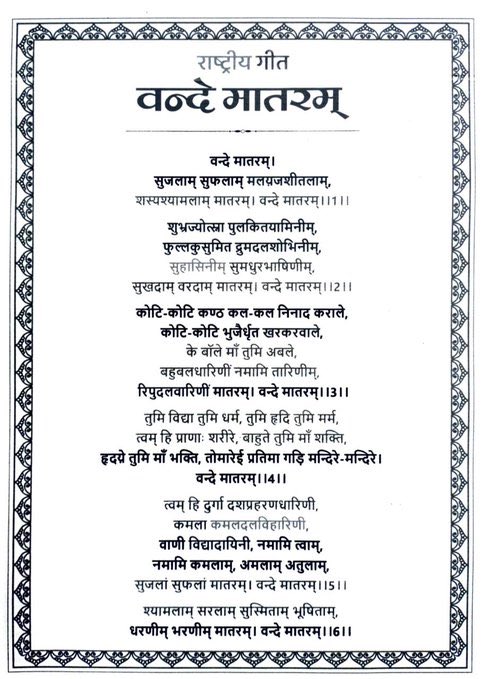
The country is celebrating the 150th anniversary of its national song, Vande Mataram. A song that has inspired generations of Indians to unite, rise and celebrate the spirit of the nation. Prime Minister Narendra Modi, in one of his Mann Ki Baat programmes, said, If patriotism is an emotion beyond words, then Vande Mataram is the song that lends the tangible voice form to that abstract feeling.
Today, our correspondent brings a report on the history of India’s iconic national song.
Penned by renowned Bengali poet and novelist Bankim Chandra Chatterjee, Vande Mataram stands as a symbol of India’s awakening. As the British colonial rule tightened its grip, Vande Mataram found voice in India’s freedom movement. Over time, Vande Mataram became a rallying cry of freedom fighters, a symbol of love and devotion to the motherland and a slogan of resistance against the foreign power. Vande Mataram was not only used as a song in meetings, processions and large public gatherings but also as a slogan by freedom fighters and patriots. 1882 was the year when the song found its home in Bankim Chandra’s celebrated Bengali novel Anandamath, which was set in the background of the Sannyasi Rebellion in the late 18th century. The patriotic song was written in Sanskrit.
In the year 1896, Gurudev Rabindranath Tagore sang this melodic poem for the first time at the Kolkata session of the Indian National Congress. Being officially adopted as the national song by the Constituent Assembly of India on 24th January 1950, the then President of the Constituent Assembly, Dr Rajendra Prasad, declared that Vande Mataram should be honoured equally with the national anthem, Jana Gana Mana.
