



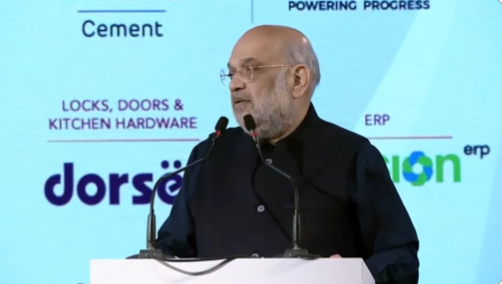
Home and Cooperation Minister Amit Shah today highlighted that substantial progress has been made over the past 11 years in developing next-generation infrastructure. Addressing the Confederation of Real Estate Developer Associations of India (CREDAI) National Conclave 2025, in New Delhi, Mr. Shah said, several flagship initiatives, including National Infrastructure Pipeline, Bharatmala, Sagarmala, and Parvatmal, have significantly strengthened urban development and laid out a clear roadmap to position India among the world’s leading infrastructure countries.
He added that these efforts have yielded positive results. The Minister further stated that the government is pursuing an ambitious and forward-looking approach to urban development, with a strong emphasis on responsible real estate development. He urged developers and industry bodies to work together towards a shared vision of sustainable and responsible growth.
Union Home Minister said that the country’s urban population is projected to reach about 50 per cent by 2047, and hence the responsibility of providing housing largely rests with developers. Mr Shah further highlighted Real Estate Regulatory Authority was a structural breakthrough in reforming the sector, which is now recognized worldwide. Mr. Shah said that RERA has done commendable work in India towards protecting the interests of homebuyers, ensuring fair transactions, and guaranteeing quality construction, and that it has been adopted by 35 states and Union Territories. He also highlighted that Real Estate Sector has benefitted the most from the next generation GST Reforms.
Addressing the conclave, Union Minister for Environment, Forest and Climate Change, Bhupender Yadav underscored the critical role of real estate sector as a nation-building force shaping the nation’s economic growth, urban future and quality of life. Highlighting the sector’s impact on energy use, water consumption, waste generation, air quality and urban heat, Mr. Yadav said real estate is central to India’s climate commitments, including the Net Zero target by 2070. He added that sustainability is no longer optional but the foundation of future-ready development. Noting the growing impacts of climate change on cities, the Minister called for climate-resilient urban planning, including flood-resilient layouts, heat-adaptive materials, increased green cover and sustainable mobility solutions.