





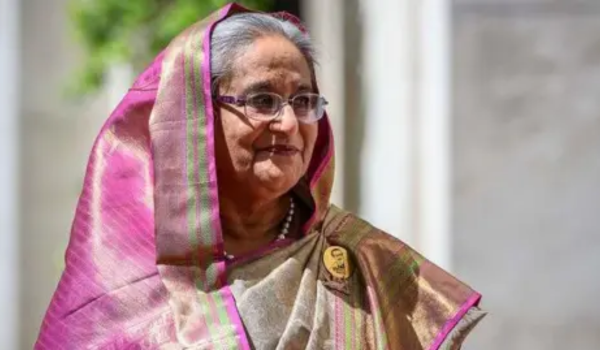
Former Bangladesh Prime Minister Sheikh Hasina criticised Muhammad Yunus-led interim government, accusing it of empowering extremist elements, stoking anti-India sentiment and weakening democratic structures.
In an email interview with a news agency, Hasina alleged that recent tensions were deliberately engineered. She claimed that Yunus had installed such elements in positions of power and released convicted terrorists from prison, adding that New Delhi’s concerns about the security of its diplomatic staff were well-founded.
Former Bangladesh Prime Minister Sheikh Hasina has described India as Bangladesh’s most steadfast friend and partner for decades, saying the relationship is deep, fundamental and will endure beyond any temporary government. She also said the secular character of Bangladeshi politics remains one of the country’s greatest strengths.
Responding to remarks by some Bangladeshi leaders referring to the Siliguri Corridor, Hasina termed such statements dangerous and irresponsible. She said no serious leader would threaten a neighbouring country on which Bangladesh depends for trade, transit and regional stability.
On the upcoming parliamentary elections scheduled for February next year, Sheikh Hasina said a poll without her party, the Awami League, would not be an election but a “coronation”. With the Awami League barred from contesting, she alleged that Muhammad Yunus is governing without a single vote from the people and is now seeking to ban a party that has won nine national elections through popular mandate.
Meanwhile, Leaders of minority organisations in Bangladesh have accused the Mohammad Yunus-led interim government of failing to stop violence, killings and persecution targeting religious and ethnic minorities. The allegations were made today during a human chain organised by the Minority Unity Front in Dhaka.
Speakers said inadequate investigations and a lack of justice have created widespread fear, particularly among minority communities, ahead of the upcoming national election. They also raised concerns over attacks on media houses and cultural institutions.
Protesters demanded a proper investigation into the killing of Hindu garment worker Dipu Chandra Das and accountability for those responsible, warning that continued inaction could further endanger minority communities. Labour and human rights groups, including the Workers’ Safety Forum, also formed a human chain demanding a speedy trial in Dipu Chandra Das’s murder.
