


Lok Sabha has passed the Finance Bill, 2026, by voice vote. The bill seeks to give effect to the financial proposals of the Central Government for the financial year 2026-2027. The House gave its nod to the amendments moved by the government.
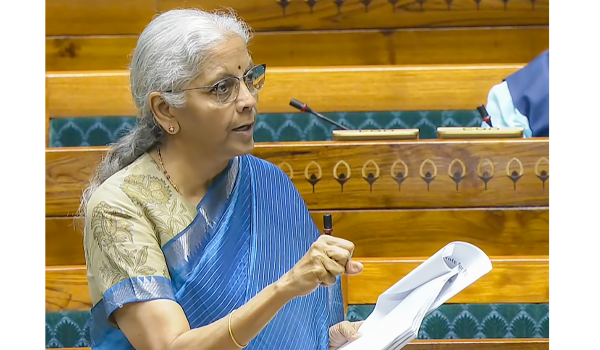
Replying to the discussion on the Finance Bill, 2026, in the House today, Union Finance Minister Nirmala Sitharaman said that the government is empowering the MSMEs, farmers, and cooperatives, as they are at the centre of employment generation, production and overall development of the country. Mrs Sitharaman said that the government is also supporting key sectors such as digital infrastructure, electronics manufacturing, marine products, leather, critical minerals, and nuclear energy, among others, to make India a developed nation. She said the reforms are not happening out of compulsion but out of conviction with clarity, commitment and confidence. Mrs Sitharaman said that India is riding on the reform express under the leadership of Prime Minister Narendra Modi. The Minister informed that this finance bill focuses on the middle class and the government has exempted basic customs duty on 17 critical life-saving drugs.
The Minister said, Finance Bill 2026-27 rests on five clear principles. This includes trust-based tax administration, improving the ease of living for the common citizens, empowering MSMEs, farmers and cooperatives, strengthening India as a global business hub and enabling seamless trade facilitation and customs reforms. She said the Finance Bill aims to improve liquidity and cut the compliance burden. Mrs Sitharaman said the bill focuses on ease of living and minimising the hardship of taxpayers.
Referring to the West Asia crisis and emerging challenges, the Finance Minister said that the government is taking steps to deal with the challenges and mitigating its impact. Mrs Sitharaman also criticised the opposition, saying that instead of standing with the government, the Opposition is taking irresponsible steps and misleading the public.