

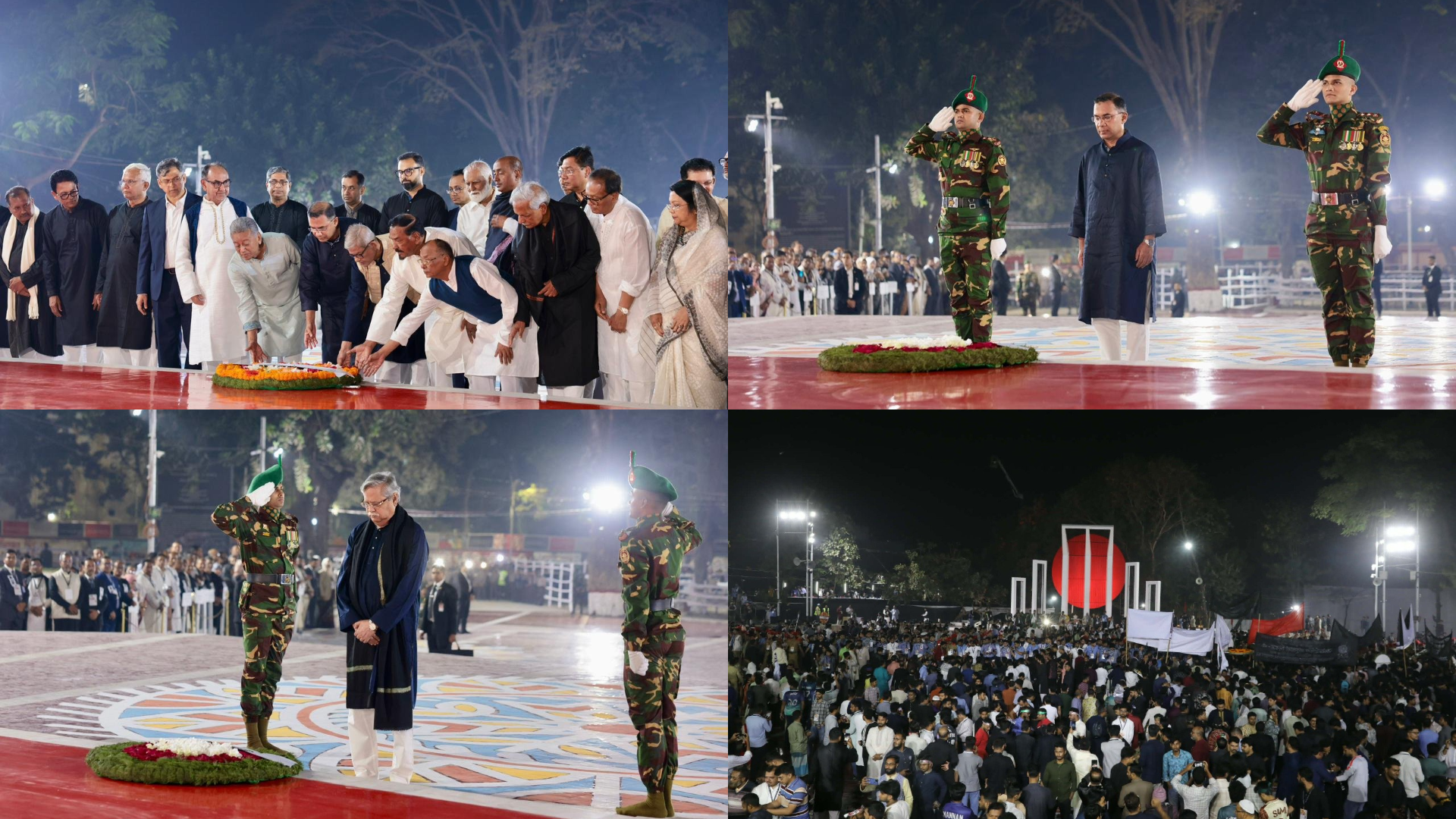
Bangladesh just after midnight last night paid solemn homage to the martyrs of the 1952 Language Movement, as President Mohammed Shahabuddin and Prime Minister Tarique Rahman led the nation in observing Amar Ekushey and International Mother Language Day.
The president placed the first wreath at the Central Shaheed Minar at 12:01 am, followed by the prime minister minutes later. Special prayers were offered seeking eternal peace for the martyrs of 21 February 1952 who were killed by the bullets of Pakistani forces for demanding the rightful place for Bangla in the then East Pakistan.
The day is observed worldwide as UNESCO-declared International Mother Language Day, recognising Bangladesh’s historic struggle for linguistic rights.
Thousands of barefoot mourners from all walks of life streamed toward Shaheed Minars across the country shortly after midnight, placing flowers in memory of those killed on 21 February 1952 while demanding Bangla be recognised as a state language.
Senior government leaders, cabinet members, chiefs of the armed forces, diplomats and representatives of political parties also paid tribute. Opposition leader Shafiqur Rahman led a delegation in offering homage, marking a notable participation by his party at the memorial.
In separate messages, the president and the prime minister emphasised preserving linguistic diversity and upholding the dignity of Bangla. The prime minister recalled the sacrifice of Abul Barkat, Abdus Salam, Rafiq Uddin Ahmed and Abdul Jabbar, saying Ekushey stands as an enduring chapter of national history and democratic aspiration.
National flags flew at half-mast while cultural institutions, educational bodies and Bangladesh missions abroad arranged commemorative programmes. Tight security and traffic arrangements were enforced around Dhaka University area as crowds continued to visit the memorial throughout the day, reflecting the lasting emotional significance of Ekushey in the nation’s identity.