






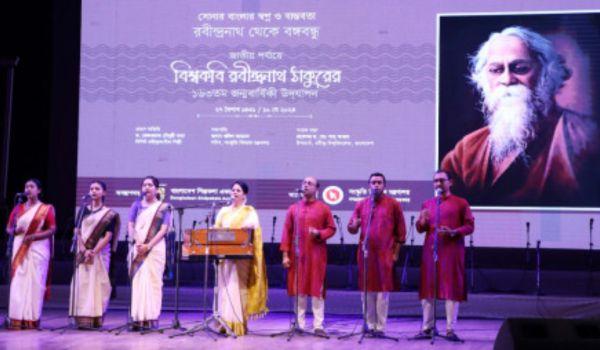
The 165th birth anniversary of Nobel laureate poet Rabindranath Tagore is being observed across Bangladesh today with nationwide cultural programmes, discussions and tributes celebrating his enduring contribution to literature, music and humanist thought. Rabindranath Tagore’s works and philosophy continue to inspire generations across South Asia.
Born on May 7, 1861, corresponding to the 25th of Baishakh, 1268 in the Bangla calendar, at Jorasanko Thakur Bari in Kolkata, he transformed Bangla literature through his poetry, novels, songs, plays and essays rooted in universal humanism and creativity. In Bangladesh, Tagore’s birth anniversary is traditionally celebrated according to the Bangla calendar.
Tagore became the first Asian Nobel laureate in 1913 after receiving the Nobel Prize in Literature for his acclaimed work Gitanjali. His celebrated literary works include Gora, Chokher Bali and Shesher Kobita, while songs collectively known as Rabindra Sangeet remain central to Bengali cultural identity.
The Ministry of Cultural Affairs organised a three-day national programme under the theme “Rabindranath: The Poet of Peace and Humanity”, with the main event held at Shilaidaha Kuthibari, one of Tagore’s historic residences.
Cultural Affairs Adviser Nitai Roy Chowdhury attended the inauguration as chief guest, while academic Wakil Ahmed delivered the welcome speech. Prime Minister’s Cultural Adviser Zahed Ur Rahman also joined the programme. Commemorative events were also organised at Patisar, Shahjadpur and Dakshindihi, locations closely associated with Tagore’s life and literary journey.
Bangladesh Shilpakala Academy arranged a four-day cultural festival featuring Rabindra Sangeet, dance performances, recitations and discussions, while Bangla Academy and Chhayanaut jointly hosted special Rabindra celebrations in Dhaka.
Educational institutions across the country also observed the day through essay competitions, cultural events and discussions aimed at introducing younger generations to Tagore’s ideals of peace, coexistence and humanity.
