

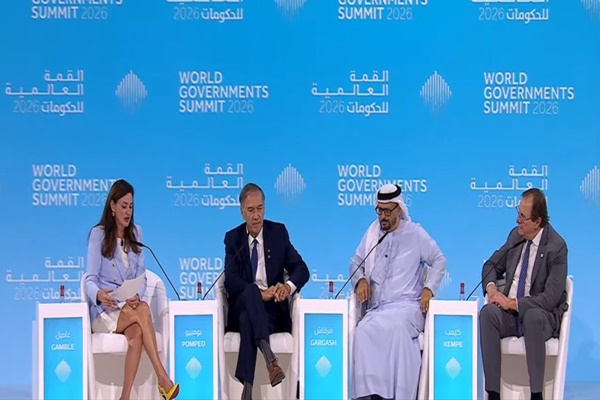
The World Government Summit 2026 has opened in Dubai under the theme Shaping Future Governments, bringing together global leaders, policymakers and business executives to examine how innovation, sustainability and technology are reshaping public policy.
Discussions at the summit are focused on strengthening government policies and boosting international cooperation to tackle economic, social and technological challenges. The programme includes more than 445 sessions featuring over 450 global figures, among them presidents, ministers and experts, addressing the future of government work, investment, public finance and leadership.
Addressing the gathering, International Monetary Fund managing director Kristalina Georgieva said the global economy had shown unexpected resilience despite geopolitical tensions and uncertainty over trade policy. Referring to shifts in United States trade and foreign policy over the past year, she said the world had become “more diverse, more multipolar, and more resilient as a result,” even as it faced increasing geopolitical and technological complexity.
Georgieva said the IMF had upgraded its global growth projections for the coming year, including for the United Arab Emirates and Gulf countries. She attributed the improved outlook to the adaptability of the private sector, a more limited impact from anticipated trade shocks, and what she described as “incredible enthusiasm about the potential of AI to lift productivity.”On concerns over tariff volatility and inflationary pressures, Georgieva said global trade had adjusted rather than collapsed. “Trade is like water. You put an obstacle, it goes around it,” she said, adding that while some tariffs were initially announced at high levels, negotiations had brought them down significantly, with actual collections closer to 9 percent compared with earlier estimates of more than 20 percent.