





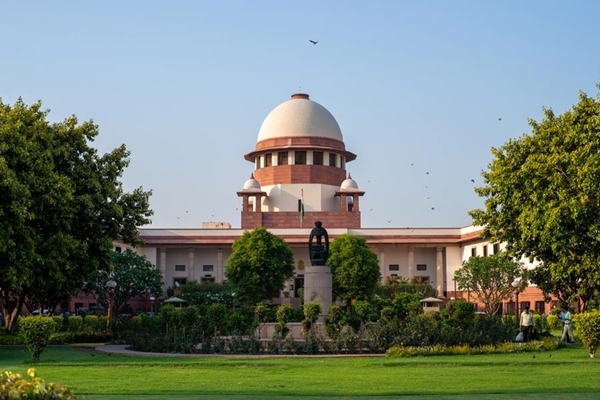
The Supreme Court has stayed its own order issued on 20th November on the Aravalli hills and the Aravalli range definition. A vacation bench of the Chief Justice Surya Kant and Justices JK Maheshwari and AG Masih has also ordered the formation of a new expert committee to examine issues that require to be examined in terms of the definition of Aravallis.
Union Minister for Environment, Forest and Climate Change Bhupender Yadav has welcomed the Supreme Court decision to stay on its own order concerning the Aravalli range, and the formation of a new committee to study issues. In a social media post, Mr Yadav said the government is committed to providing all assistance sought from his Ministry for the protection and restoration of the Aravalli range. The Minister said, as of now, a complete ban on mining remains in force for new mining leases as well as the renewal of existing ones.
In its ruling today, the Supreme Court said that clarifications are necessary on the definitions approved earlier, and the direction of the apex court in the 20th November verdict be kept in abeyance. It said there are issues that will require clarification. The Court has also issued notice to the Centre and the four Aravalli States, Rajasthan, Gujarat, Delhi and Haryana, seeking their response to its suo motu case on the issue.
On Saturday, the Supreme Court took suo motu cognisance of concerns surrounding the definition of the Aravalli range, amid mounting criticism from environmentalists and opposition parties over its potential impact on the fragile mountain ecosystem. The development follows objections to the Centre’s newly notified definition of the Aravalli mountain range, which is based on a 100-metre height criterion.
On December 24, the Union Ministry of Environment, Forest and Climate Change had also issued directions to the States for a complete ban on the grant of any new mining leases in the Aravallis. This prohibition applies uniformly across the entire Aravalli landscape and is intended to preserve the integrity of the range.
The Aravalli range is a 670-kilometre-long mountain range in the northwestern part of the country. The highest elevation of the range has been recorded at one thousand 722 metres.
The hill starts near Delhi, passes through Haryana, Rajasthan, and ends in Gujarat. The highest peak of the range is known as Guru Shikhar, in Mount Abu, Rajasthan. The Aravalli range is the oldest fold-mountain belt in India, dating back around two billion years.
