

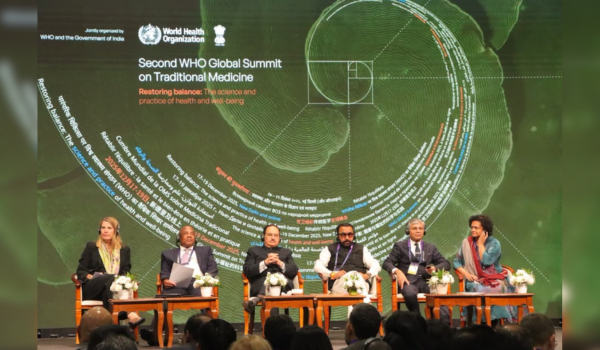
The second WHO Global Summit on Traditional Medicine began at Bharat Mandapam in New Delhi yesterday. Addressing the event, Ayush Minister Prataprao Jadhav, highlighted India’s long-standing experience in traditional medicine and emphasised the importance of strengthening research, quality standards, and global cooperation. He noted that this collaboration, which began in 2016, represents a key milestone in advancing traditional medicine at the global level.
Mr. Jadhav also underscored India’s expanding international cooperation through education, research and capacity building, supported by scholarships, global collaborations and digital platforms such as the Ayush Grid.
Meanwhile, WHO Director-General Dr Tedros Adhanom Ghebreyesus reaffirmed the organisation’s commitment to uniting the wisdom of millennia with modern science and technology. Dr Tedros highlighted the importance of building bridges between science and tradition, and between knowledge and lived experience.
As a central feature of the Summit, an Ayush Expo is being organised to showcase India’s Ayush systems, including Ayurveda, Yoga, Unani, Siddha, Sowa-Rigpa, and Homoeopathy, alongside traditional medicine practices from around the world. Dr. Tedros noted that the World Health Assembly has adopted the WHO Global Traditional Medicine Strategy 2025-2034 and highlighted the establishment of the WHO Global Centre for Traditional Medicine in India to translate the strategy into action.
Significant scientific initiatives are expected to be announced at the Summit along with new global commitments aimed at promoting the safe, effective, and evidence-based use of traditional medicine worldwide. The theme of the summit is Restoring balance: The science and practice of health and well-being.